Why Is Digital Transformation Different for Traditional Indian Businesses?
Traditional Indian businesses aren’t a niche — they’re the backbone of the economy. According to Ministry of MSME figures reported in early 2026, MSMEs contribute roughly 31.1% of India’s GDP, about 35.4% of manufacturing output, and around 48.6% of exports (Ministry of MSME, Government of India, as reported January 2026). Many of these businesses share starting conditions that generic transformation frameworks don’t account for:
Decisions concentrate in a few people, so adoption depends on owner conviction, not just IT approval
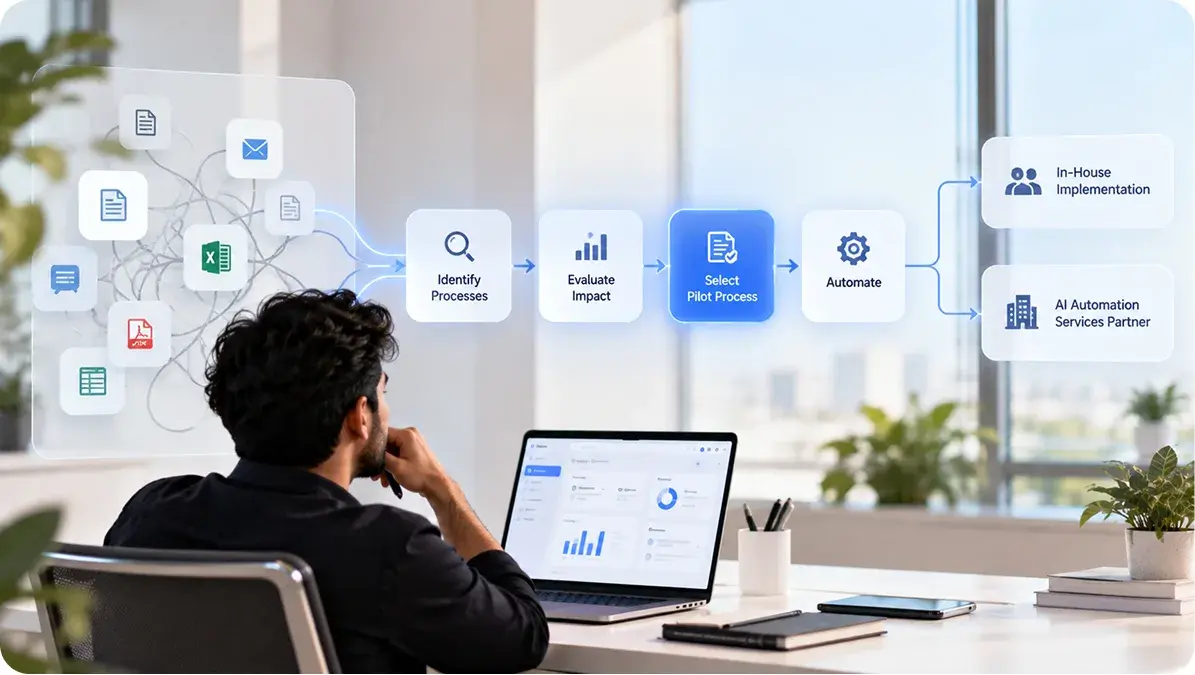
Data lives in several places at once — Tally for accounts, Excel for stock and costing, WhatsApp for orders and approvals, paper for gate passes and job cards
Physical work is the business: production, dispatch, site visits and counter sales happen away from a keyboard, so a system that only a back-office clerk can update is stale by design
Networks extend beyond the company — dealers, distributors, transporters and job-workers who must also share information
Compliance is non-negotiable and data-heavy, including GST e-invoicing and e-way bill workflows
This is exactly where the PhyGital idea earns its keep: the transformation succeeds or fails at the point where physical activity becomes data.
What Does the Evidence Say About Transformation Success?
The honest answer is sobering, and it’s worth getting the numbers right. McKinsey’s Global Survey on digital transformations found that fewer than one-third of organizational transformations succeed at improving performance and sustaining the gains, and that digital transformations are harder still. In more traditional industries — it named oil and gas, automotive, infrastructure and pharmaceuticals — reported success rates fell between 4 and 11 percent (McKinsey & Company, “Unlocking success in digital transformations,” 2018).
Two caveats matter. First, this is a global, self-reported survey from 2018, not India-specific data. Second, you may have seen “70% of digital transformations fail” attributed to McKinsey; that figure is routinely misquoted, and we deliberately don’t use it. The reliable takeaway is narrower and more useful: traditional, process-heavy industries find transformation hardest, which is why sequencing and change management matter more than technology selection.
The Six-Phase PhyGital Roadmap
| Phase | Focus | Typical outputs | Signal you’re ready for the next phase |
|---|---|---|---|
Diagnose | Map order-to-cash, procure-to-pay and delivery workflows; find where data is re-typed | Process map, baseline metrics (e.g., days to invoice, stock mismatches, order errors) | Leadership agrees on 2–3 measurable problems to fix first |
One source of truth | Choose the system of record; clean master data (customers, items, prices) | Single ERP/order-processing core; parallel spreadsheets retired | Teams stop maintaining shadow Excel files |
Connect the physical | Capture work where it happens — mobile apps, barcode/QR, digital job cards, attendance | Offline-capable field and floor capture feeding the core system | Data appears in the system the same day, without re-entry |
Automate workflows | Approvals, alerts, reorder triggers, invoicing, e-invoicing/e-way bill handling | Rules-based workflow automation and exception queues | Routine transactions complete without manual chasing |
Add intelligence | Management dashboards, anomaly detection, forecasting, AI assistants on clean data | Live dashboards; AI features on trusted data | Leaders use the dashboard, not a weekly Excel, to decide |
Extend outward | Dealer/distributor and customer portals; lead management and marketing tied to the same data | Self-service portals, CRM-linked marketing | External partners transact in your system, not by phone |
Phase by Phase: What Actually Matters
Phase 0–1: Follow the money trail first
Start where cash and errors concentrate: order → dispatch → invoice → collection. In our experience, this chain is where re-keying, disputes and delays cluster, and it’s also where leadership feels the pain directly. Resist the temptation to start with the most visible or most fashionable module. Master-data cleanup is unglamorous but decisive — duplicate customers and inconsistent item codes quietly poison every later phase, including any AI you add.
Phase 2: Design for the person at the machine, not the person at the desk
This is the PhyGital core of Image Online’s approach. If a supervisor must walk back to an office to update the system, the data will be late and incomplete. Mobile capture, barcode/QR scanning and offline-first design (so work continues when connectivity drops) make the physical event itself the data entry. Interfaces should be built around the actual job — language, screen size, number of taps — because staff will route around anything slower than their current method.
Phase 3–4: Automate before you “AI”
Rules-based automation of approvals, alerts and reorders delivers value reliably and is easy to audit. AI becomes useful after that, when clean, connected data exists. Adding AI to unreliable data is the fastest way to lose trust in both; our guide to integrating AI into CRM and ERP systems covers this sequencing in detail.
Phase 5: Open the system to your network
Dealer portals, customer self-service and lead management tied to the same core data turn internal efficiency into commercial advantage — fewer order calls, faster quotations, and marketing that can be traced to revenue.
How Should You Phase Your Budget and Engagement?
Good digital transformation services are structured so each phase stands on its own and produces a measurable result before the next is approved. That protects you in three ways: you can stop or re-scope if results disappoint, early wins build internal credibility with sceptical stakeholders, and later phases benefit from what you learned earlier. Be cautious of any proposal that bundles all six phases into a single fixed commitment with value arriving only at the end.
Common Mistakes We See
Buying software before mapping the process. The tool then dictates the workflow, and staff work around it
Digitising the paper instead of redesigning the process. A digital copy of a bad process is still a bad process
Ignoring the shop floor and the field. Adoption fails where work happens, not in the boardroom
Treating change management as training day. McKinsey’s findings point to culture and ways of working as decisive; reviews, incentives and visible leadership use of the new system matter more than a one-off workshop
Running parallel systems indefinitely. If Excel remains the “real” record, the new system becomes a chore, not a source of truth
Measuring activity, not outcomes. “Deployed to all users” is not a result; “invoices raised within 24 hours of dispatch” is
Frequently Asked Questions
Start with the order-to-cash chain — order capture, dispatch, invoicing and collections — because it concentrates errors, delays and disputes, and leadership feels the impact directly. Pair it with master-data cleanup. Avoid starting with the most visible or trendy module; pick the process with the most re-keying and a metric you can baseline.
Not necessarily. Many businesses succeed by keeping a stable accounting system and building integration around it, then replacing components only where they block progress. The deciding question is whether your current system can share data reliably with field, floor and partner workflows. If it can’t, integrate or replace that part, not everything.
Design for their workflow first: local-language screens, minimal taps, offline capability and faster-than-paper entry. Involve supervisors in design, pilot on one team, and make the system the only path for approvals or payments tied to the data. Adoption follows when the new way is clearly easier than the old one.
Multi-location businesses need a single system of record with location-aware permissions, so each site captures its own physical activity while head office sees consolidated, near-real-time data. The challenge shifts from digitising one workflow to standardising master data and processes across sites without forcing every location into an identical routine.
Compare against the baseline you set in Phase 0 — for example days from dispatch to invoice, stock-record mismatches, order errors, or hours spent on month-end reconciliation. If shadow spreadsheets have been retired and management reports come from the system rather than manual consolidation, the foundation is working.
After the data foundation is reliable. AI features such as forecasting, anomaly detection or assistants depend on clean, connected data. Introduce them in Phase 4 on a specific, measurable use case, starting read-only (insights, suggestions) before allowing the system to take actions.
Build GST e-invoicing and e-way bill workflows into the core process rather than bolting them on, and treat personal data handling under India’s Digital Personal Data Protection Act, 2023 as a design requirement for customer, employee and dealer data. Confirm current thresholds and rules with your tax and legal advisers before finalising scope.
Conclusion
For traditional Indian businesses, digital transformation isn’t about adopting the newest technology; it’s about making real-world work visible, reliable and connected, in an order that builds trust at each step. The PhyGital roadmap — diagnose, create one source of truth, connect the physical, automate, add intelligence, then extend outward — is how Image Online approaches digital transformation services for manufacturers, traders and service businesses.
If you’d like to pressure-test your current setup against this roadmap — and identify which phase will deliver the quickest measurable win for your business — our team in Mumbai can walk through your order-to-cash flow with you and map the first phase.


 Previous